

What to Look for in a Turntable: 7 Tips for Beginners
Getting into vinyl can feel overwhelming when you're staring at dozens of turntable options. Price tags range from under $100 to thousands of dollars, and the specs seem like they're written in another language. Here's the thing though – you don't need to become an audio engineer to pick a great first turntable.
Whether you're rediscovering vinyl after years away or diving in for the first time, these seven tips will help you find a setup that sounds great and fits your budget.
1. Start With Your Budget (And Stick to It)
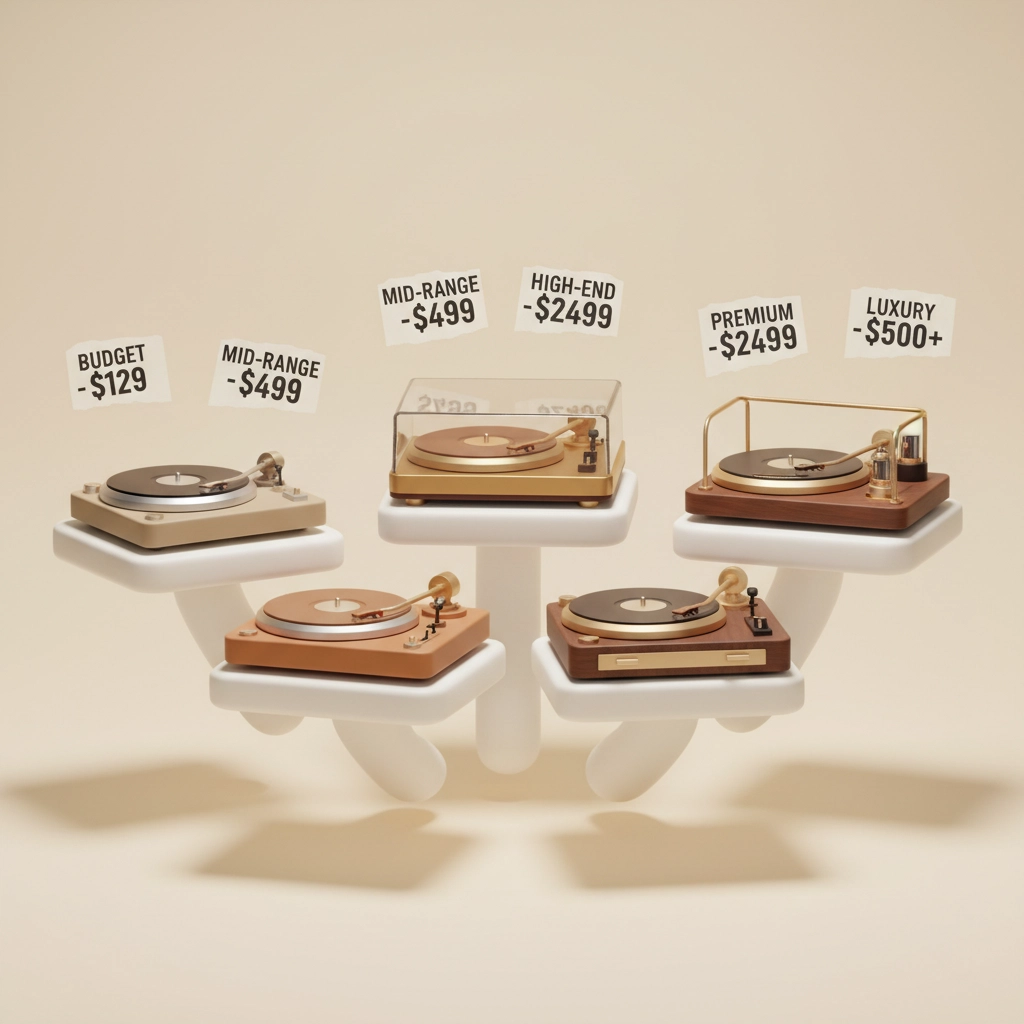
Before you fall in love with any specific model, figure out what you can realistically spend. Turntables range from basic $80 models to high-end units costing several thousand dollars.
For beginners, sweet spots exist around:
- $100-200: Entry-level with built-in speakers
- $200-400: Better build quality, upgradeable components
- $400-600: Solid mid-range options that'll last years
Remember, the turntable is just one part of your setup. Factor in costs for speakers, amplification, and accessories. A $300 turntable might need another $200-300 in additional gear to sound its best.
Don't get caught up in "future-proofing" your first purchase. It's better to buy something good within your budget now than to stretch for features you might not even use.
2. Choose Your Operation Style: Manual vs. Automatic
This decision affects how hands-on you'll be with your records.
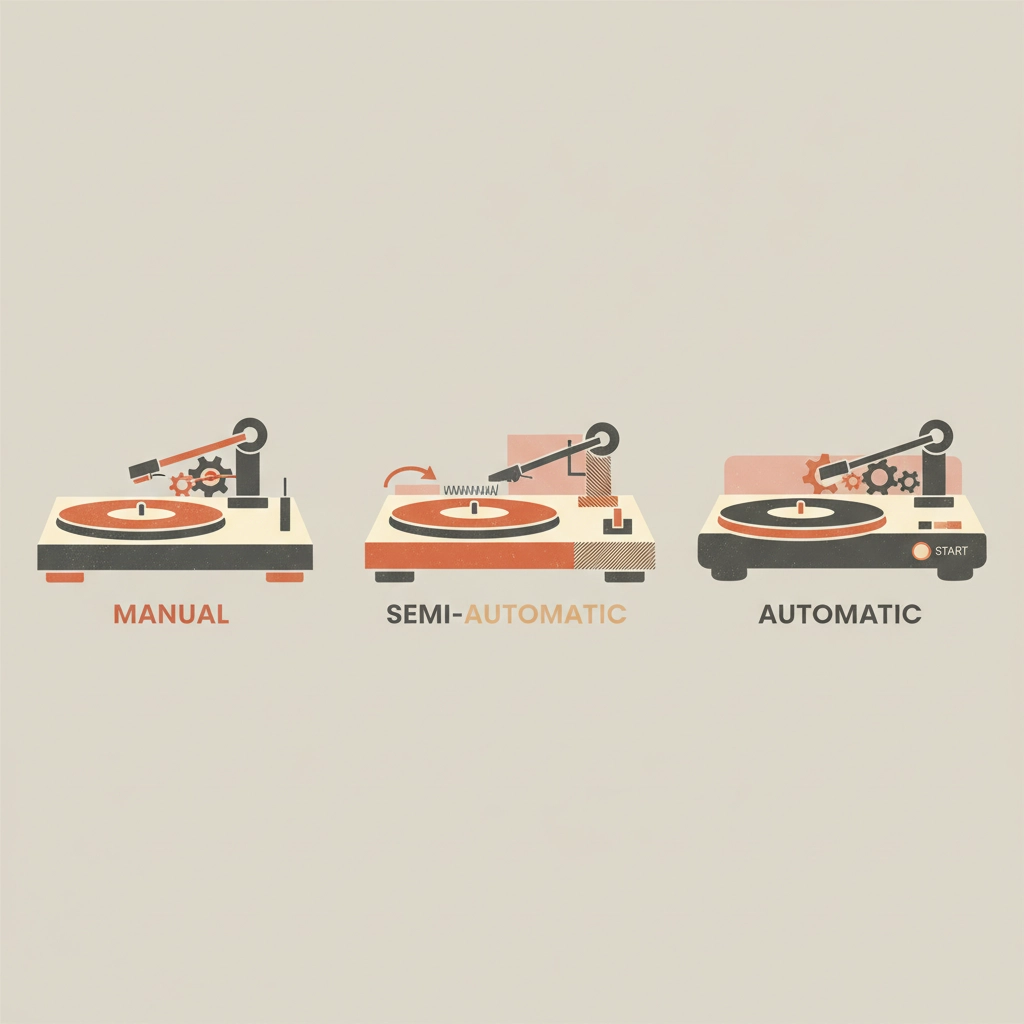
Manual turntables require you to place the needle on the record yourself and lift the tonearm when the side ends. Most vinyl enthusiasts prefer manual operation because it gives you complete control and tends to offer better sound quality at any given price point.
Semi-automatic turntables let you place the needle manually, but automatically lift the tonearm at the end of the record. This prevents your stylus from riding in the runout groove indefinitely.
Automatic turntables handle everything – they'll position the needle and lift it when done. While convenient, they're typically found on budget models and can be less precise than manual options.
For beginners who want to develop good vinyl habits, manual or semi-automatic is usually the better choice. You'll learn proper handling techniques and get better long-term value.
3. Understand Drive Types: Belt vs. Direct
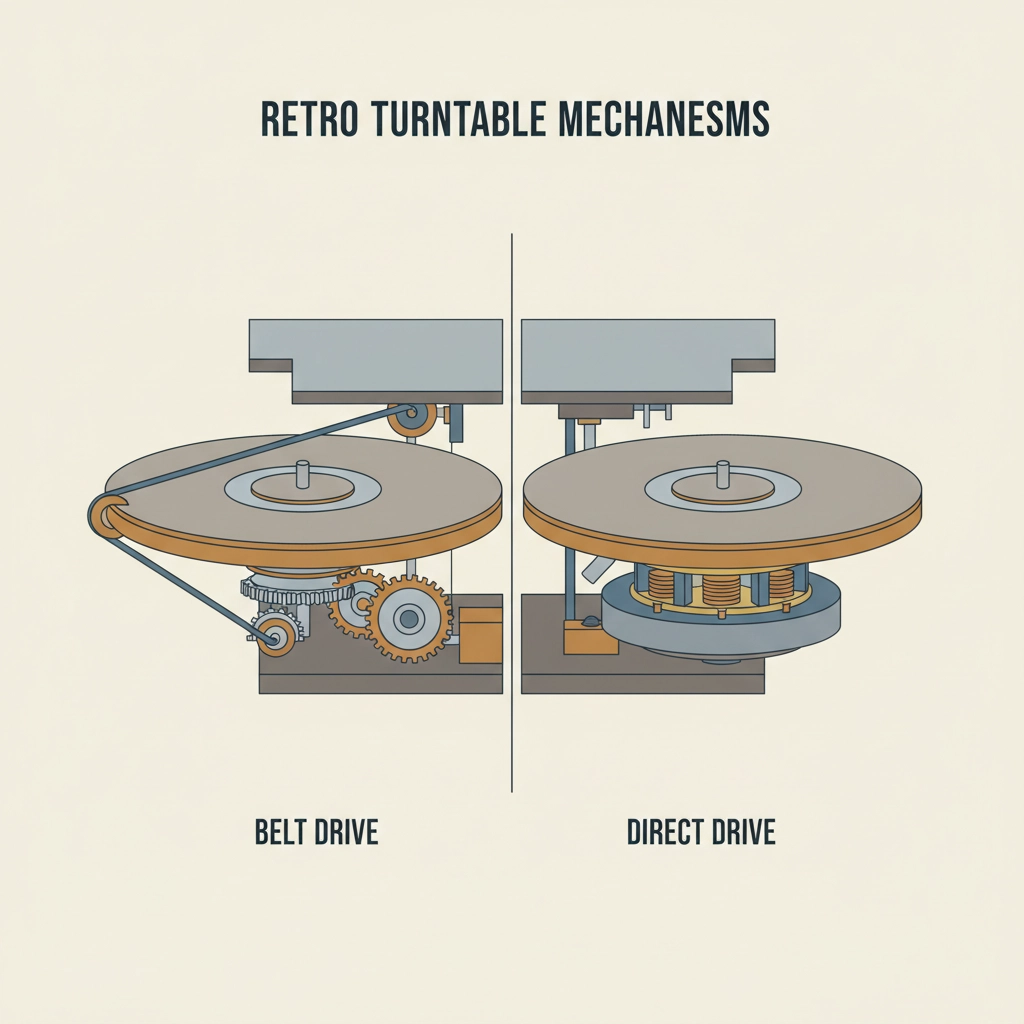
Turntables use two main methods to spin the platter:
Belt drive turntables use a rubber belt to connect the motor to the platter. The belt absorbs motor vibrations, resulting in cleaner sound. They're quieter and typically less expensive. The downside? Belts can stretch over time and may slip during heavy DJ use.
Direct drive turntables connect the motor directly to the platter. They offer consistent speed, instant start/stop, and handle scratching and backspinning well. They're preferred by DJs but can transfer more motor noise to your audio.
For casual listening and most beginners, belt drive offers better value. The sound quality difference is noticeable, and you probably won't miss the quick start-up times.
4. Don't Ignore Speed Options and Pitch Control
Most records play at either 33⅓ RPM (LPs) or 45 RPM (singles), so your turntable needs both speeds. Look for electronic switching rather than manual belt repositioning – it's much more convenient.
Some turntables include 78 RPM for vintage records, but unless you specifically collect pre-1960s music, this isn't essential.
Pitch control lets you fine-tune the playback speed. While not crucial for beginners, it's helpful for matching tempo when mixing or correcting records that play slightly off-speed.
5. Consider Your Space and Setup Requirements
Turntables need stable, level surfaces away from vibration sources. That wobbly side table next to your couch won't cut it.
Think about:
- Surface space: Measure your intended location
- Clearance: You need room to lift the dust cover and handle records
- Cable routing: Consider where your amplifier and speakers will sit
- Isolation: Avoid areas near speakers that could cause feedback
Some turntables have built-in speakers, eliminating the need for additional equipment but limiting your upgrade path. Others require separate speakers and amplification.
If space is tight, look for compact designs or models with vertical storage options for when not in use.
6. Pay Attention to Cartridge and Stylus Quality
The cartridge holds the stylus (needle) that tracks in your record grooves. This is where the magic happens – poor cartridge quality directly impacts sound and can damage your records.
Many beginner turntables come with:
- Built-in cartridges: Often basic quality but functional
- Upgradeable cartridges: Better long-term value as you can improve sound later
- High-quality stock cartridges: Found on mid-range models
Look for turntables with standard cartridge mounts if you plan to upgrade. Popular beginner-friendly cartridge series include Audio-Technica's AT-VM95 line, which offers various stylus options at different price points.
Avoid turntables with permanently mounted cartridges unless they're specifically designed for scratching or portability.
7. Factor in Additional Components You'll Need
A turntable alone won't make music – you need the complete signal chain.
Preamp (Phono Stage): Records are cut with RIAA equalization that needs correction. Some turntables have built-in preamps, others require external ones.
Amplification: Unless your turntable has built-in speakers, you'll need an amplifier or powered speakers.
Speakers: The final link in your audio chain. Budget at least as much for speakers as your turntable.
Accessories: Consider a record cleaning brush, anti-static sleeve, and proper storage solutions.
Many "beginner packages" bundle these components, but check the quality of included items. Sometimes buying pieces separately gives better value.
What About New vs. Used?
Used turntables can offer excellent value, but require more knowledge to evaluate. Unless you have an experienced friend to help, stick with new models for your first purchase. You'll get warranty coverage and known condition.
If you do consider used options, focus on well-regarded vintage brands like Technics, Pioneer, and Dual. Avoid anything that looks like it needs significant repair work.
Common Beginner Mistakes to Avoid
Buying based on looks alone: That retro-styled suitcase player might look cool, but it probably sounds terrible and could damage your records.
Ignoring cartridge replacement costs: Factor stylus replacement into your ongoing budget. Quality styli last 1000+ hours but need eventual replacement.
Skimping on speakers: A great turntable with terrible speakers will sound worse than a decent turntable with good speakers.
Not considering room acoustics: Even the best system sounds poor in a bad room. Think about soft furnishings and speaker placement.
Making Your Decision
Once you've narrowed down your options, read reviews from actual users, not just professional reviewers. Look for comments about build quality, customer service, and long-term reliability.
Consider buying from retailers who specialize in audio equipment. They often provide better support and may offer setup services.
The art of vinyl record cleaning becomes important once you have your setup running, and understanding vinyl record costs helps with building your collection strategically.
Getting Started
Your first turntable doesn't have to be perfect – it just needs to play your records without damaging them while sounding good enough to enjoy. Most people upgrade their system gradually, starting with better speakers, then cartridge, then eventually the turntable itself.
Focus on getting something reliable within your budget, then spend time learning proper handling techniques and building your record collection. The technical stuff becomes more interesting once you're actually listening to music.
Remember, the best turntable is the one you'll actually use. Whether that's a simple automatic model or a manual belt-drive unit, the important thing is getting started with vinyl and discovering what you love about the format.
