

How Buying Merch Can Help Canadian Indie Musicians Pay for Studio Time
TL;DR: Recording an independent project in Canada can cost hundreds or thousands of dollars once studio time, mixing, mastering, and session players are included. Buying merch creates direct revenue that can help emerging artists cover those costs alongside grants, live shows, and other income.
The short answer
Merch sales give musicians money they can put toward recording expenses. A full studio day in Canada can cost about $400 to $850 before tax, while mixing, mastering, and session players add more to the budget. If an artist clears $15 from a merch sale, 40 sales could cover a $600 studio day. That is why buying merch supports artists in a practical way.
What does recording cost in Canada?
Studio costs vary by city, room, engineer, project size, and booking length. The following figures are rough Canadian estimates, not fixed industry prices.
A typical independent recording budget may include:
- Studio time
- Recording engineer
- Producer or production support
- Editing and tuning
- Mixing
- Mastering
- Session musicians
- Travel, meals, and accommodation
- Taxes and payment fees
How much is a studio day?
Many Canadian studios offer hourly rates, but full-day bookings can reduce the effective cost.
Examples from Canadian studios include:
- $400 per 10-hour day with an assistant at Demitone Studio
- $450 to $550 per 10-hour day for independent musicians at Vertical Studios
- $700 to $800 per 10-hour day with an engineer at Monarch Studios
- $80 per hour with an engineer at Mix11 Studios
For planning purposes:
- Budget studio: $400–$500 per day
- Typical commercial studio: $600–$850 per day
- Higher-end or producer-led room: $1,000–$1,500 or more per day
Toronto, Vancouver, Calgary, Montréal, and other major music centres have different price ranges. Smaller cities may offer lower rates, while travel can add costs if the right studio is outside the artist’s home region.
Some studios also add GST or HST. Deposits may be required before the booking is confirmed.

What do mixing and mastering add to the budget?
Recording the tracks is only one part of finishing a release.
Mixing balances the recorded parts, including vocals, drums, instruments, effects, and dynamics. Mastering prepares the final mix for streaming, downloads, physical formats, and consistent playback.
Typical Canadian estimates:
- Emerging engineer mixing: $150–$300 per song
- Established independent mixer: $300–$700 per song
- Higher-profile mixer: $1,000 or more per song
- Budget mastering: $50–$100 per song
- Professional mastering: $80–$200 per song
For a five-song EP, mixing and mastering might add:
- Lower estimate: $1,000
- Mid-range estimate: $2,000–$4,000
- Higher estimate: more than $5,000
As one current example, Mix11 lists mixing at $375 per song and mastering at $80 per song. Project packages may cost less than booking each service separately.
What do session musicians cost?
Independent artists may need a drummer, bassist, string player, backing vocalist, horn player, or other contributor.
Session fees depend on:
- Instrument
- Preparation required
- Number of songs
- Length of the session
- Whether the player receives songwriting or royalty credit
- Union or non-union terms
- Travel requirements
A rough estimate for non-union independent sessions is:
- $75–$150 per hour
- $200–$350 for a three-hour session
- $150–$300 per song for a straightforward overdub
Some Canadian production studios list session musicians at $150–$200 per hour. Professional or union rates may be higher. Artists should confirm payment, credits, usage rights, and royalties in writing before recording.
What might a small Canadian EP cost?
Consider a five-song EP recorded by an independent artist.
Example budget
- Three studio days at $600: $1,800
- Editing and overdubs: $400
- Session player: $300
- Mixing at $375 per song: $1,875
- Mastering at $80 per song: $400
- Local transportation and meals: $250
Estimated total: $5,025
This is not a quote. It is a planning example. A home-recorded project may cost less. A live band recording in a larger room may cost more. A producer, additional musicians, video content, artwork, distribution, and promotion can increase the total.
Monarch Studios’ published three-song EP packages show how quickly costs can rise when recording, editing, instruments, production, and mixing are combined. The studio lists discounted packages from $6,300 to $7,300 for a three-song EP with a staff or senior engineer.
This is why merch matters for musicians. A project can require several thousand dollars before an artist earns meaningful income from the finished release.
How can merch pay for studio time?
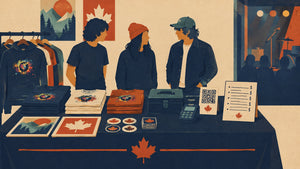
Merch works as a direct revenue stream. The artist sells an item, keeps the amount left after production and transaction costs, and applies that money to the project.
The important figure is the net amount, not the retail price.
Example: a $30 item
- Retail price: $30
- Manufacturing cost: $10
- Payment and packaging costs: $5
- Estimated amount remaining: $15
At $15 net per item:
- 20 items = $300
- 40 items = $600
- 100 items = $1,500
- 200 items = $3,000
A $600 studio day would require approximately 40 items at that net amount. A $3,000 recording block would require approximately 200 items.
Actual margins vary. Artists may pay for design, shipping, storage, taxes, market fees, and unsold inventory. Pre-orders and limited runs can reduce the risk of producing too much stock.
Why is merch useful alongside grants?
Merch should not replace grants or other funding. It can help cover the portion of a project that grants do not fund, or provide cash flow while an application is pending.
Canadian artists may consider:
- FACTOR, which offers programs for eligible Canadian artists and recordings
- Provincial arts councils
- Provincial music industry programs
- Canada Council for the Arts
- Canadian Music Centre, particularly for composers and contemporary classical work
- Local music organizations and city-based programs
For example, FACTOR’s Artist Development program offers 75% of eligible expenses up to $5,000 for qualifying activities, including sound recording, touring, showcasing, video production, and marketing. FACTOR states that eligible artists must meet specific release and profile requirements.
Provincial programs differ. Saskatchewan artists may review SK Arts’ Independent Artists program for artistic creation and production projects, as well as Creative Saskatchewan’s music funding options for commercial recording activity.
Grant applications often require:
- A detailed project budget
- Quotes and invoices
- Proof of payment
- A release plan
- Artist information
- A clear explanation of the project
Merch revenue can help an artist contribute their share of the budget. It can also pay expenses that do not fit a specific grant program.
How does buying merch support the Canadian independent music scene?
Fans have several ways to support indie musicians:
- Buy merch at shows
- Purchase from an artist’s online store
- Attend local concerts
- Pay for music instead of relying only on unpaid streams
- Share new releases
- Join mailing lists
- Recommend artists to friends
- Purchase tickets early
- Support crowdfunding campaigns
Buying merch is useful because it creates a larger payment than many individual streams. It also gives fans something tangible while helping fund the next project.
Funky Moose Records’ merchandise section states that proceeds support Canadian indie musicians. Items include shirts, hoodies, hats, stickers, bags, and other branded merchandise. The available prices range from approximately $4 to $44, giving supporters different ways to contribute.

What should fans remember before buying?
Merch is not a guarantee that a specific artist will receive a fixed amount. Costs, agreements, manufacturing, and distribution arrangements vary.
The practical point is simple: merchandise revenue helps keep money moving through the Canadian independent music scene. It can contribute to studio bookings, mixing, mastering, session players, rehearsal space, travel, and release promotion.
For people looking for how to support indie musicians, a merch purchase is one clear option. It provides direct financial support rather than relying only on passive attention.
Support emerging artists through merch
Browse the Funky Moose merchandise section. Buying merch helps support emerging indie musicians in Canada and contributes to the wider independent music community.
Key Takeaways
- A Canadian studio day can cost roughly $400–$850, with higher-end options reaching $1,500 or more.
- Mixing, mastering, session players, taxes, and travel can add thousands to an EP budget.
- A merch item that generates $15 net requires about 40 sales to cover a $600 studio day.
- FACTOR, provincial arts councils, and other programs can complement merch revenue.
- Buying merch helps support emerging indie musicians and the Canadian independent music scene.
